
Book Excerpts
Home > Book Excerpts
- INTRODUCTION
A 33-man patrol had been moving through dense jungle for nearly three hours under rising heat and exhaustion. Led by Captain Thomas Murphy, the first platoon of Charlie Company, 4-31st Infantry, advanced northeast from Hill 118 on a mission surrounded by uncertainty, rumor, and growing tension following recent heavy losses within the battalion.
In the days prior, multiple companies had already been ambushed, leaving the unit under pressure and forcing leadership to push forward despite the risks. Every movement carried weight, as soldiers remained alert in an environment where danger could emerge without warning.
As the platoon descended from the forest into an abandoned rice paddy, the silence was suddenly broken.
An enemy ambush erupted without warning, tearing through the formation in seconds and turning a routine patrol into a desperate fight for survival.
-
CHAPTER 1
YOU’RE IN THE ARMY NOW
Most people who have served in the military remember basic training as one of the most intense and defining experiences of their lives. Drill sergeants and instructors left lasting impressions on young recruits through strict discipline, repetition, and unrelenting pressure designed to build obedience and resilience.
Training methods of the time were harsh by modern standards, relying heavily on constant correction, verbal intensity, and relentless repetition to shape recruits into soldiers capable of enduring combat conditions.
Drill sergeants enforced authority with absolute control, using sharp language, intimidation, and constant evaluation to break individual habits and rebuild discipline from the ground up. Every action was corrected, every mistake highlighted, and every recruit pushed beyond comfort.
In one memory from Ft. Benning’s Sand Hill Basic Training in November 1967, the reality of this environment became clear during a routine formation. Even the simplest mistake such as mispronouncing a name could turn into immediate correction, discipline, and physical punishment meant to reinforce attention and obedience.
-
CHAPTER 2
THE GREEN MACHINE: TIGER LAND, FORT McCLELLAN
AIT training at Tiger Land was designed to push soldiers beyond basic endurance. Unlike basic training, it focused on intense physical conditioning through calisthenics, confidence courses, and long, demanding road marches that tested both stamina and discipline.
Training included bayonet courses where soldiers charged obstacles, jumped into trenches, and practiced combat drills against mannequins. Road marches often stretched for miles under strict time limits, with terrain marked by punishing hills that challenged every step.
Despite the intensity, the soldiers were still young mostly between 17 and 22 years old thrown into a system that transformed civilians into combat-ready troops. They trained, joked, and posed like warriors, even as the reality of war slowly closed in on them.
After weeks of preparation, orders came. Nearly all would soon be deployed to Vietnam, carrying with them uncertainty, fear, and the weight of an unknown future.
-
CHAPTER 3
JANE AND RICK: SOLDIER BOY
As training ended, soldiers prepared for deployment with limited understanding of the war awaiting them. Many were young, inexperienced, and uncertain about the political or military realities behind the conflict. What they carried instead was duty, fear, and the pressure of expectations they could barely define.
For Rick, this transition also brought personal conflict. During his final leave, he spent time with Jane, sharing moments of love and hope for a future after the war. She asked him to marry her before he deployed, but he hesitated, promising instead to marry her upon his return.
Behind that promise lay unspoken fear the possibility that the future they planned might never arrive.
-
CHAPTER 4
THE AMERICAN WAR: A VIEW FROM THE VIETNAMESE
The Vietnam War referred to in Vietnam as “The American War” claimed over one million North Vietnamese and Viet Cong lives, becoming one of the most devastating conflicts of the era.
Its roots stretched far beyond the battlefield. Vietnamese nationalist movements were shaped by global events such as World War I and the Russian Revolution, where exposure to European politics and Marxist ideology influenced growing resistance against colonial rule. During the interwar period, many Vietnamese laborers and soldiers were sent to France, where ideas of equality, independence, and anti-colonial struggle took deeper root.
Following World War II, Vietnam’s struggle for independence intensified. At the Geneva Conference in 1954, the country was temporarily divided at the 17th parallel into North and South, with plans for a future reunification vote that never took place. This division set the stage for escalating conflict between communist and anti-communist forces, further intensified by foreign involvement and Cold War tensions.
By the late 1950s, guerrilla warfare had already begun, and American military advisors were increasingly involved in supporting and training South Vietnamese forces. As tensions escalated, the conflict evolved into a full-scale war that drew in global powers.
On July 8, 1959, the first American casualties of the conflict were recorded when Viet Cong forces attacked U.S. military advisors near Biên Hòa, marking a turning point in what would become a long and costly war.
-
CHAPTER 5
IN COUNTRY: VIETNAM, DECEMBER 1968
Hast spent Christmas Day on guard duty inside a sandbagged position along the Chu Lai perimeter. Armed with an M-16 and a single magazine, the sense of vulnerability was immediate far too little firepower for the threat they knew could come at any moment.
While entertainment unfolded elsewhere on base, soldiers like Lieutenant Jerry Josey struggled with a different reality. Eager to fight and finish his tour, he prepared constantly, checking his weapon and gear repeatedly as he awaited assignment to Charlie Company.
Soon, replacements began arriving under the direction of seasoned soldiers who had already endured combat. New arrivals were processed quickly, issued essential gear, and stripped of anything unnecessary as they were briefed on the realities of field conditions, heat, and constant movement.
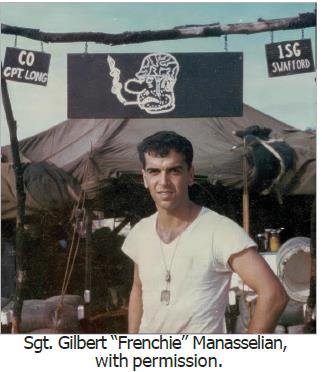
Veterans like “Frenchie” made one thing clear combat readiness was not optional. Ammunition was limited, expectations were high, and the next mission would not allow room for hesitation.
-
CHAPTER 6
THE FIRST MISSION: AMBUSH, THE ATTACK & THE FIRST GI KIA
At dawn, a light rain settled over the jungle, lifting the fog just enough to reveal the terrain ahead. Along the trail, signs of recent enemy presence were clear—fresh spider holes and punji stakes, sharpened bamboo traps designed to wound and infect.
As Charlie Company advanced, the point squad made first contact with an NVA soldier, and the sharp crack of an AK-47 shattered the silence. For many soldiers, it was the first time the sound of live combat replaced training drills.
Within moments, the situation escalated into a full ambush. Enemy fire erupted from the hedgerows and tree lines, forcing soldiers to take cover in bomb craters and scattered terrain features. Wounded men called for medics as mortar rounds landed nearby and chaos spread through the formation.
Despite heavy fire, small units pushed forward, returning fire and attempting to regain control of the battlefield. In close-quarters fighting, enemy positions were assaulted and cleared, with soldiers engaging at dangerously close range under relentless pressure.
By the end of the engagement, casualties had been sustained on both sides, marking the brutal reality of their first full combat mission in-country.